


Choosing the right strapping machine can feel like a high-stakes decision, especially when you're running a small packaging operation warehouse where every square foot and every team member counts. The question most plant managers face isn't simply "which machine is better?" but rather "which machine fits the way we actually work?"
This guide breaks down the key differences between semi automatic and automatic strapping machines. You'll learn how to evaluate your current workload, floor space, labour requirements, and future growth plans so you can make a confident equipment decision.
Fromm Packaging Systems Canada offers both machine types engineered for reliability across Canadian industries, from lumber operations to manufacturing plants.
By the end, you'll have a clear framework for matching the right strapping machine to your operation's unique needs.
Key Takeaways: Semi Automatic vs Automatic Strapping Machines
- Semi automatic strapping machines work well for operations processing fewer than 100 packages per hour with variable product sizes.
- Automatic strapping machines deliver faster throughput and reduce repetitive tasks when your line handles consistent, high-volume loads.
- Floor space requirements differ significantly—semi automatic machines need as little as 1.5 square metres, while automatic systems may require conveyor integration.
- Fromm Packaging Systems Canada engineers both semi automatic and automatic strapping solutions backed by Swiss precision and local Canadian support.
- Planning an upgrade path from semi automatic to automatic equipment can protect your initial investment as production demands grow.
What Is a Strapping Machine and Why Does It Matter for Small Operations?
A strapping machine applies plastic or steel bands around packages, pallets, or bundles to secure them for transport or storage. The machine tensions the strap, seals it (typically through heat welding or a metal seal), and cuts the excess, all in seconds.
For small packaging teams, strapping machines reduce physical strain on workers while delivering consistent tension on every package. Manual strapping with hand strapping tools works fine at low volumes, but as throughput increases, the repetitive motion takes a toll.
Strapping machines also standardize your packaging quality. Every strap sits at the same tension, which means fewer damaged goods in transit and fewer customer complaints. That consistency matters whether you're shipping lumber bundles, metal coils, or cartons of consumer goods.
How Do Semi Automatic Strapping Machines Work?
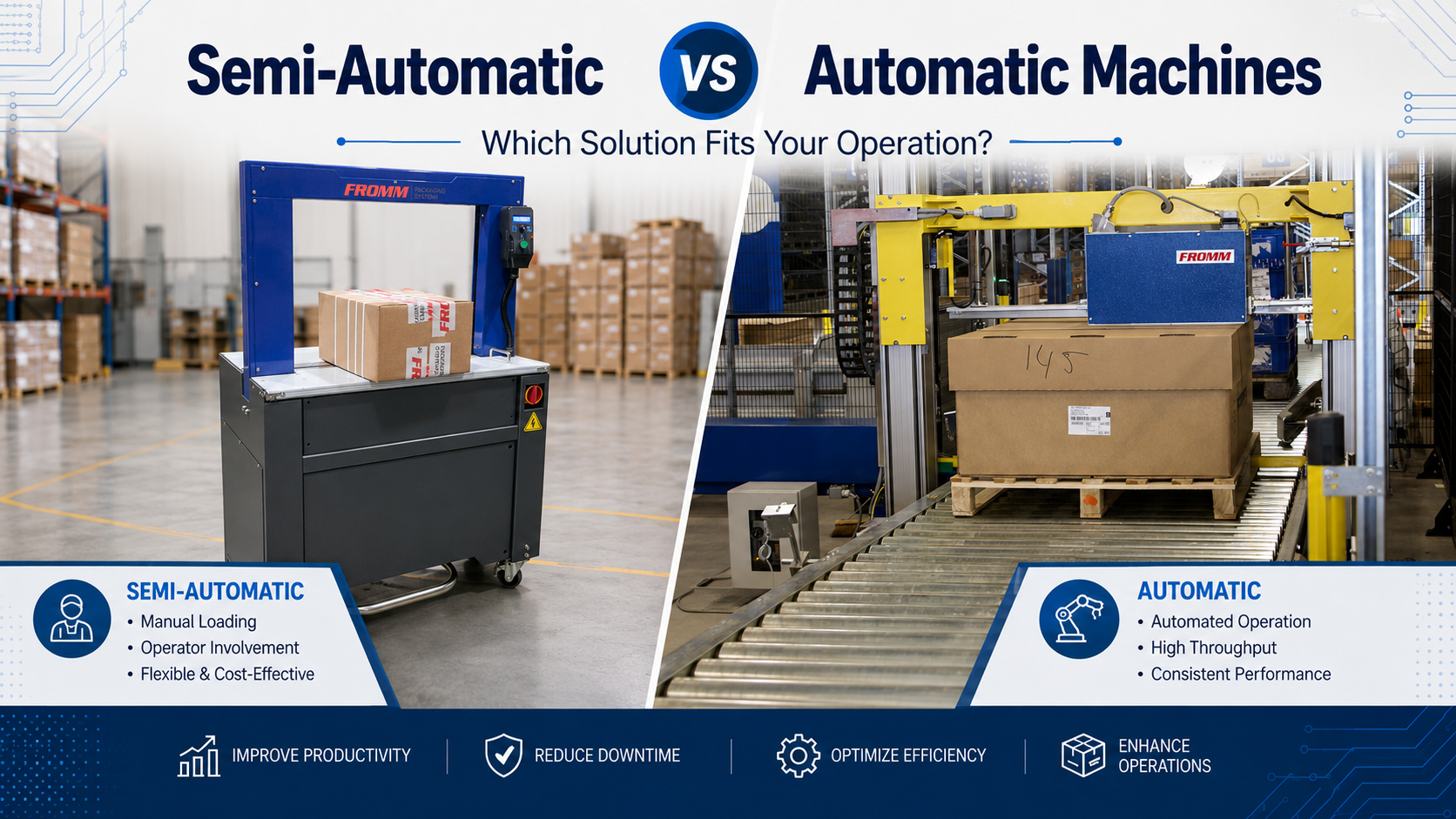
Semi automatic strapping machines require an operator to position the package and place the strap around it. Once the strap is in position, the operator activates the machine, usually with a foot pedal, push button, or tabletop sensor. The machine then tensions, seals, and cuts the strap automatically.
Think of it as a partnership between your team member and the equipment. The operator handles product flow and strap placement; the machine handles the heavy lifting of tensioning and sealing.
When Semi Automatic Makes Sense
Semi automatic machines shine in operations where package sizes vary frequently. If your team straps boxes of different dimensions throughout the day, the flexibility to manually position the strap around each unique package offers real advantages.
These machines also suit operations with lower volumes, typically under 100 packages per hour. At that pace, the time saved by full automation may not justify the additional investment.
Finally, semi automatic machines work well in facilities where floor space is limited. A tabletop unit can fit into tight areas without requiring dedicated conveyor runs. Tabletop strapping machine like FRP1000 are also ideal for office environments.
How Do Automatic Strapping Machines Work?
Automatic strapping machines handle the entire process without operator intervention. Packages move along a conveyor, sensors detect when a package is in position, and the machine applies, tensions, seals, and cuts the strap—all while the operator monitors from a distance.
These systems integrate into your existing packaging line, creating a continuous flow from product handling through final strapping. High-end automatic machines can process 60 or more packages per minute, far exceeding what any semi automatic setup can achieve.
When Automatic Makes Sense
Automatic strapping machines make sense when your operation handles high volumes of uniformly sized products. If you're running the same carton or pallet size through your line hundreds of times per shift, automation removes the bottleneck.
These machines also reduce labour costs over time. Automatic systems also reduce repetitive strain injuries. If your current process has workers bending, reaching, and manually tensioning straps all day, moving to automatic equipment protects their health and your workers' compensation costs.
Comparing Workload Capacity: How Many Straps Per Hour Do You Need?
Before comparing machines, you need to understand your actual strapping volume. Count the number of packages or pallets your team straps during a typical shift. Then calculate straps per hour.
Here's a general guide:
- Under 50 straps per hour: Manual strapping tools may still be efficient enough.
- 50-100 straps per hour: Semi automatic machines deliver meaningful time savings.
- 100-300 straps per hour: Semi automatic machines work, but automatic machines may improve efficiency.
- Over 300 straps per hour: Automatic machines become essential to maintain pace.
These numbers shift based on your specific conditions. If your packages require multiple straps each, multiply accordingly. If your team currently struggles to keep up, that's a signal to consider equipment one tier higher than your current volume suggests.
Cycle Time: The Hidden Factor
Cycle time measures how long it takes to complete one strapping operation. Semi automatic machines typically cycle in 2-3 seconds once the strap is in position. Automatic machines cycle in 1-2 seconds and eliminate the manual positioning step entirely.
Those seconds add up. Over an eight-hour shift at 200 packages, saving one second per strap recovers more than three minutes of productivity. At higher volumes, the math becomes even more compelling.
Floor Space Requirements: What Fits Your Facility?
Small packaging operations often face limited floor space. Before committing to any strapping machine, measure your available area and consider how the equipment integrates with your current workflow.
Semi Automatic Footprint
Tabletop semi automatic machines measure roughly 60-80 cm wide and 40-60 cm deep. Stand-alone units with built-in frames run larger, typically 120-150 cm long and 60-80 cm wide. Either option fits into a relatively compact space.
These machines don't require conveyors, though you can integrate them with existing roller tables or workstations. You need enough clear space for an operator to stand comfortably and move packages in and out.
Automatic Footprint
Automatic strapping machines require more floor space because they integrate with conveyor systems. The strapping unit itself may be similar in size to a semi automatic machine, but the conveyor in-feed and out-feed sections add length to your line.
A basic automatic strapping station with short conveyors might occupy 3-4 metres of linear floor space. More complex systems with accumulation zones, multiple strapping heads, or integrated corner protector applicators require even more room.
Ceiling height matters too. Vertical strapping heads for pallets extend upward, and you'll need clearance for the arch that the strap travels through.
Labour Considerations: How Does Each Machine Affect Your Team?
Labour is often the largest cost in any packaging operation. Strapping machines can either reduce labour requirements or shift how your team spends their time.
Semi Automatic Labour Needs
Semi automatic machines still require a dedicated operator at the strapping station. That operator positions packages, places straps, and activates the machine. Depending on your throughput, this could be a full-time role or part of a broader job responsibility.
The benefit comes from reduced physical strain. Instead of manually tensioning every strap with a hand tool, the operator lets the machine do the heavy work. This reduces fatigue, lowers injury risk, and often improves strapping consistency.
Automatic Labour Needs
Automatic machines can run with minimal supervision. One operator can monitor multiple strapping stations, loading consumables and addressing any jams or errors. In fully integrated lines, the strapping machine operates as part of a larger automated system that may only need periodic checks.
This frees up team members for other tasks, quality checks, palletizing, shipping documentation, or operating other equipment. For small teams where everyone wears multiple hats, that flexibility is valuable.
Training Requirements
Both machine types require operator training, but automatic machines typically need more technical knowledge. Operators must understand conveyor controls, sensor calibration, and basic troubleshooting for jams or feed issues.
Fromm Packaging Systems Canada includes training as part of equipment installation, and ongoing support helps your team stay confident with the equipment.
Strapping Material Considerations
The type of strap you use affects machine selection. Both semi automatic and automatic machines work with polypropylene (PP) and polyester (PET) strapping, but some automatic systems also handle steel strapping for heavy-duty applications.
Polypropylene (PP) Strapping
PP strapping is the most economical option. It works well for light to medium-duty applications bundling cartons, securing shrink-wrapped pallets, or strapping lightweight products. PP straps are fully recyclable, supporting sustainability goals.
Most tabletop semi automatic machines use PP strapping exclusively. It's easy to feed, seals reliably with heat welding, and costs less per meter than other materials.
Polyester (PET) Strapping
PET strapping offers higher tensile strength and better shock resistance than PP. It's the right choice for heavier loads—lumber bundles, metal parts, or pallets that travel long distances and face rough handling.
Both semi automatic and automatic machines handle PET strapping. Fromm Packaging manufactures both PP and PET strapping engineered to work with their machines for consistent performance.
Steel Strapping
Steel strapping is reserved for the heaviest applications—steel coils, large metal fabrications, and extremely heavy building materials. Automatic strapping systems can apply steel straps at high tension, but semi automatic machines for steel strapping are typically handheld pneumatic tools rather than tabletop units.
If your operation handles steel strapping, you'll likely use a combination of handheld tools for flexibility and automatic systems for high-volume, consistent loads.
Investment Costs: What Should You Expect to Pay?
Strapping machine costs vary widely based on features, throughput capacity, and level of automation. While specific pricing changes with market conditions, understanding the general tiers helps you budget appropriately.
Semi Automatic Price Range
Entry-level tabletop semi automatic machines represent the most accessible option for small operations. These machines deliver reliable performance for moderate volumes without a significant capital outlay.
Higher-end semi automatic machines with stainless steel frames (for wet environments), custom arch sizes, or higher tension capabilities cost more. Features like automatic strap feeding and anti-jam technology add value and price.
Automatic Price Range
Automatic strapping machines cost more than semi automatic units, reflecting their greater complexity and throughput capability. The strapping machine itself is part of the cost; you also need to budget for conveyors, controls integration, and installation.
Fully integrated automatic strapping systems with multiple heads, strap dispensers, and corner protector applicators represent a more substantial investment. These systems deliver the highest throughput and the greatest labour savings over time.
Total Cost of Ownership
The purchase price is only part of the equation. Consider:
- Consumables: Strapping material is an ongoing cost. Higher-volume operations consume more strap.
- Maintenance: All machines need regular maintenance. Automatic machines have more moving parts.
- Downtime: A machine that jams frequently costs you productivity. Reliability matters.
- Labour savings: Automatic machines may reduce labour costs enough to offset their higher purchase price.
Fromm Packaging Systems Canada offers service and maintenance support across Canada, helping you keep machines running and minimize unexpected downtime.
Building an Upgrade Path: Starting Small and Growing
For many small operations, the smartest strategy is to start with a semi automatic machine and plan for an eventual upgrade to automatic equipment as volumes grow.
How to Plan Your Upgrade Path
When selecting a semi automatic machine, consider compatibility with future automatic systems. Some manufacturers design their equipment so that conveyors and controls added later integrate smoothly with the original strapping head.
Ask your equipment supplier about modular systems. Can you add a conveyor in-feed later? Can the strapping head be repositioned into an inline configuration? These options protect your initial investment.
Signs It's Time to Upgrade
Watch for these signals that suggest moving from semi automatic to automatic strapping:
- Your dedicated strapping operator cannot keep pace with production.
- Strapping has become a bottleneck that delays shipments.
- Repetitive strain complaints increase among your team.
- Product volumes have grown 50% or more since you installed your current machine.
- You're adding a second shift that would require another dedicated operator.
Upgrading at the right time avoids the productivity losses of an overworked semi automatic system while capturing the efficiency gains of automation.
What Industries Benefit Most from Each Machine Type?
Different industries have different strapping needs based on product types, volumes, and operational constraints.
Industries Where Semi Automatic Excels
Contract packaging operations handle variable products for multiple clients. The flexibility of semi automatic machines lets them switch between product sizes without reconfiguring conveyor systems.
Small manufacturing plants producing specialty items often run short batches. Semi automatic strapping handles these variable runs efficiently without the setup time automatic systems require.
Retail distribution centres receiving mixed inbound shipments may need spot strapping rather than continuous inline operation. A semi automatic machine at a workstation handles these ad-hoc needs.
Industries Where Automatic Excels
Sawmills and lumber operations move high volumes of uniformly sized bundles. Automatic strapping machines integrate with sorting lines to strap bundles as they exit the mill.
Corrugated box plants produce thousands of identical bundles daily. Automatic inline strapping keeps pace with production speeds.
Beverage and food packaging operations running standardized case sizes benefit from automatic strapping's speed and consistency.
Metal service centres processing steel sheets, coils, or profiles need the high-tension capability and throughput of automatic steel strapping systems.
Key Features to Evaluate When Choosing a Machine
Beyond the basic semi automatic versus automatic distinction, several features affect performance and usability.
Tension Control
Adjustable tension lets you match strap tightness to your product. Fragile items need gentle tension; heavy loads need maximum holding force. Look for machines with easy tension adjustment, ideally a dial or digital control rather than internal mechanical adjustments.
Seal Quality
The seal joint must hold under stress. Heat welding (for plastic straps) creates strong, seal-free joints. Friction welding offers similar strength. For steel strapping, the notch seal or spot-weld quality determines joint integrity.
Fromm Packaging machines use advanced sealing technology with adjustable welding and cooling times for consistent seal quality across varying conditions.
Anti-Jam Technology
Strap jams halt production. Quality machines include features like automatic strap loop ejectors that clear jammed material and re-feed fresh strap without operator intervention. This reduces downtime and frustration.
Mobility
Some semi automatic machines mount on castors, letting you roll them between workstations. This flexibility suits operations where strapping happens at multiple points in the facility.
Environmental Suitability
Wet or dusty environments demand machines built for those conditions. Stainless steel frames resist corrosion in food processing or outdoor applications. Sealed electronics protect against dust in wood or metal processing facilities.
How to Evaluate Your Operation's Needs
Before contacting equipment suppliers, gather information about your operation to make conversations productive.
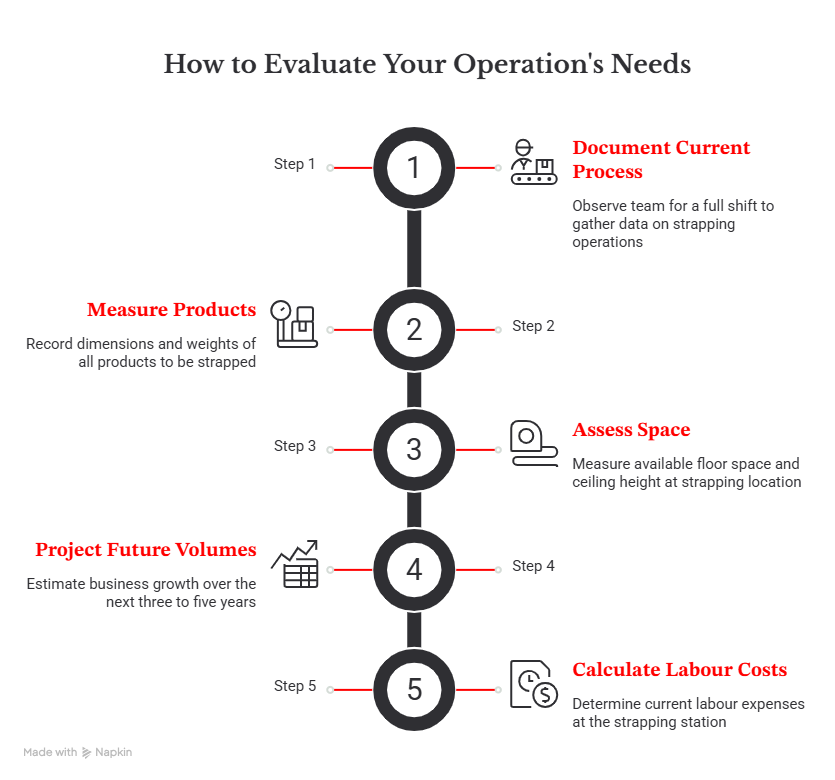
Step 1: Document Your Current Process
Observe your team for a full shift. Count how many packages they strap, how long each strapping operation takes, and how much walking or movement the current process requires. Note any complaints about fatigue or discomfort.
Step 2: Measure Your Products
Record the dimensions and weights of everything you strap. Note which products are uniform and which vary in size. This information helps suppliers recommend the right arch size and tension range.
Step 3: Assess Your Space
Measure your available floor space at the strapping location. Consider ceiling height if you're strapping pallets vertically. Photograph the area to share with equipment suppliers.
Step 4: Project Future Volumes
Where do you expect your business to be in three years? Five years? Buying for today's volumes alone risks outgrowing your equipment too quickly. Factor growth into your decision.
Step 5: Calculate Labour Costs
Understand what you currently spend on labour at the strapping station. This baseline helps you evaluate the return on investment from more automated equipment.
Working with Equipment Suppliers
A good equipment supplier does more than sell machines—they help you solve problems. Look for suppliers who ask questions about your operation rather than immediately pushing specific products.
Questions to Ask Your Supplier
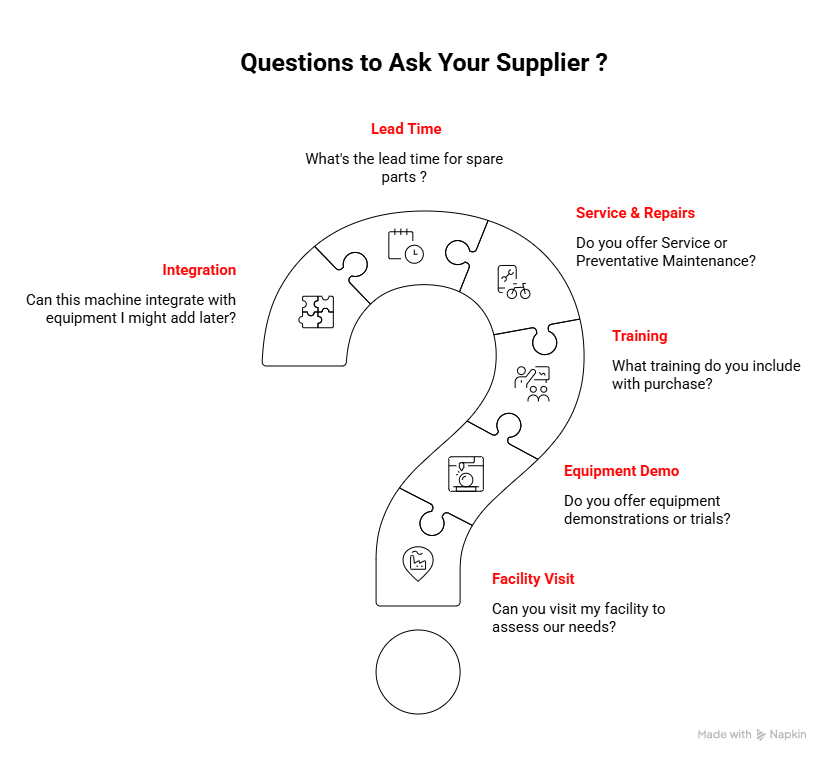
- Can you visit my facility to assess our needs?
- Do you offer equipment demonstrations or trials?
- What training do you include with purchase?
- How do you handle service and repairs?
- What's the lead time for parts?
- Can this machine integrate with equipment I might add later?
Fromm Packaging Systems Canada operates from Pickering, Ontario, offering local service and support combined with the global engineering expertise of the FROMM Group. Their team can assess your specific requirements and recommend solutions matched to your operation.
Maintenance and Long-Term Care
Any strapping machine performs better with regular maintenance. Establishing a maintenance routine protects your investment and prevents unexpected breakdowns.
Daily Maintenance Tasks
- Clear any strap debris from the strapping head area.
- Check that the strap coil feeds smoothly without tangles.
- Inspect the seal area for residue buildup.
- Verify that tension settings remain at your desired level.
Weekly and Monthly Tasks
- Clean and lubricate moving parts according to manufacturer guidelines.
- Inspect wear parts like blades, grippers, and sealing elements.
- Check electrical connections for security.
- Test emergency stop functions.
Professional Service
Schedule professional service at least annually, more often for high-volume operations. A trained technician can identify wear before it causes failures and calibrate the machine for peak performance.
Fromm Packaging offers preventive maintenance programs and tool repair services across Canada, helping you maintain uptime and extend equipment life.
Common Mistakes to Avoid
Learn from others' experiences to make a better equipment decision.
Mistake 1: Buying Based on Price Alone
The lowest-priced machine isn't always the best value. Consider reliability, service availability, and long-term operating costs. A machine that jams constantly or requires frequent repairs costs more than its purchase price suggests.
Mistake 2: Ignoring Future Needs
Buying exactly what you need today leaves no room for growth. If your business expands, you'll face the cost and disruption of replacing equipment too soon.
Mistake 3: Underestimating Installation Requirements
Automatic machines may need electrical upgrades, compressed air connections, or floor anchoring. Budget for installation costs and timeline, not just the equipment itself.
Mistake 4: Skipping Operator Training
Even simple machines benefit from proper training. Operators who understand their equipment spot problems early, use features effectively, and maintain the machine better.
Mistake 5: Neglecting Service and Support
Before buying, verify that service technicians are available in your region. A great machine with no local support becomes a liability when problems arise.
In Summary: Making Your Strapping Machine Decision
The choice between semi automatic and automatic strapping machines comes down to matching equipment capabilities to your operational reality. Neither option is universally better, the right choice depends on your volumes, space, team, and growth plans.
For small packaging operations processing variable products at moderate volumes, semi automatic machines deliver reliability and flexibility at accessible investment levels. For operations with consistent high-volume production, automatic machines reduce labour demands and increase throughput.
Many successful operations start with semi automatic equipment and upgrade to automatic systems as they grow. Planning this upgrade path from the beginning protects your investment and ensures you're never stuck with equipment that can't keep pace.
Fromm Packaging Systems Canada offers both semi automatic and automatic strapping solutions engineered with Swiss precision and supported by local Canadian expertise. Whether you're making your first strapping machine investment or planning an upgrade, their team can help you evaluate options and find equipment matched to your specific needs.